Week 2 has come to an end and honestly… I’m knackered. Mentally, emotionally, physically. But also… cautiously hopeful?
Here’s how things went down:
Day 1: The Shift Begins
First day on the increased dose and I definitely felt the difference. My brain wasn’t screaming at me from 37 different directions more like whispering from the corner. I felt alert, focused, and way more productive than usual. I got housework done, emails sent, art created, and even ate actual meals (plural).
But alongside all that, I found myself feeling quite emotional. It hit me how much I’ve struggled through life, school, work, relationships, just surviving with no idea why it was all so hard. Now, at 46, these “magic pills” are helping me make sense of myself. It’s bittersweet, but mostly it’s hope. Finally.
Day 2: Weird but Wonderful
Still sleep-deprived, but my brain felt lighter. I wasn’t panicking at every tiny thing. I was less foggy, less frantic. It’s hard to explain, like my internal chaos had taken the day off. Still a bit overwhelming emotionally though, because all of this is so new.
I realised I need help processing my grief, too. It’s something I’ve buried under the chaos, and now that the noise is quieting… it’s all floating up. But despite that, I felt grateful. Even excited about life. Weird, huh?
Day 3: Zombie Mode Activated
I got a whole four hours of broken sleep and still managed to stay awake all day without a nap. (Please clap.) Massive headache again (because of course), but my focus was chef’s kiss. I did a painting, tackled a paperwork doom pile, and ate actual food. Mood: brighter, despite the exhaustion. Small win.
Day 4: Can Someone Prescribe Sleep?
I’m seriously begging the universe for one good night’s sleep. Just one. Please.
Motivation was good though! I got stuff done, had a nap, ate properly, and felt a lot clearer in my head. The usual brain carnage was toned down, a quiet victory. But I desperately want to experience all this with a fully rested brain. It’s been years since I slept well. I miss her.
Day 5: The Grump Awakens
Still no sleep, running on fumes, and had yet another headache. My osteoarthritis flared up big time and my mood? Absolutely meh. Didn’t do much, didn’t feel like much. But I’m reminding myself not every day will feel like progress. Tomorrow is always a new shot at it.
Also, thinking I might need an afternoon top-up dose… because by 4pm I’m basically a zombie in leggings.
Day 6: Praise Be for the Nap
Still had a rubbish night’s sleep, BUT I came home from the school run and had a glorious, solid four-hour nap. Honestly, it was spiritual.
No headache today (hallelujah), mood was much better, and I even got hit with a wave of motivation… at 9pm. Of course. ADHD logic strikes again. Ate a proper dinner and, um… half a pack of biscuits. Look, we don’t judge.
Day 7: Meh x 3
Today? Meh. Mood: low. Energy: none. Focus: don’t even ask. It happens.
Dose goes up tomorrow for the final time, and I’m hoping that brings some more clarity and calm. For now, I’m resting, resetting, and reminding myself that every up has a down and vice versa.
Final Thoughts
Week 2 has been a mix of magic and migraines, breakthroughs and breakdowns. The sleep situation is still a disaster, and the headaches are not my fave, but the difference in my thinking, the clarity, the reduced overwhelm, the flickers of motivation are giving me real hope.
Thank you so much to everyone following my journey. Your encouragement means everything. Bring on Week 3. Let’s see what this next dose can do 💊💛
“I didn’t expect my first ADHD tablet to hit the mute button on the chaos in my brain but here we are. Shocked. Grateful. Slightly drowsy.”
Day One: A Brain on Mute (?!)
So… something completely bonkers happened today.
I spent the first day of my 46 years on this weird spinning planet with a quiet brain. Like… quiet. Peaceful. The kind of calm that normally only happens when all the kids are out, I’ve lost my phone, and the Wi-Fi’s gone down.
To say I’m blown away would be an understatement. Normally, my brain is a carnival of noise, lights, and someone trying to do cartwheels while reciting a shopping list. But today? Silence. Space. Actual thought completion. Is this what neurotypicals feel like all the time?! Wild.
Of course, it wasn’t all unicorns and executive function. I did get a bit of a headache (weather? life? brain finally protesting the silence?). That passed. Then, around late afternoon, I felt like I’d been lightly sedated by a sleepy woodland witch. Seriously could not keep my eyes open. Full crash-mode. Classic me: finally quiet in the head, body goes, “Cool, now nap time?”
Luckily, that passed too. I’m feeling okay now. Bit floaty. Bit cautious. But honestly? Hopeful. And stunned that one tablet could have any effect, never mind this kind of effect.
Obviously, it’s early days. We’re in titration territory, and I’m fully prepared for it to get weirder before it gets better. But still. That quiet brain thing? I’m gonna be talking about it for a while.
Because it’s the first time I’ve heard myself think. And it was lovely.
Day Two: The Magical Housework Fairy Appears
Monday morning and… I woke up in a good mood?!
Excuse me??
That never happens. Especially not on a Monday. And definitely not before at least one minor meltdown about socks.
But there I was: mildly cheerful. Somewhat rested. Looking at the world with something that may or may not have been optimism. I don’t know what’s in these tablets, but I’m officially intrigued.
The weirdly quiet brain is still going strong. Honestly, it’s a bit unnerving. Like living in a house that used to be full of noisy ghosts and suddenly… they’ve moved out. Lovely. But eerie. Definitely going to take some adjusting.
After the school run, I went back to bed for a quick snooze (because I’m not tryna win awards here, just survive the transition). But! No 5pm crash today like yesterday. Instead, just a little bit of a weird “meh” feeling around 5–6pm probably down to the fact the UK had a moment of pretending it’s tropical and my body said “absolutely not.”
Best bit of the day?
I got loads of housework done. Like, actual tidy-house magic. No procrastinating by organising the sock drawer or researching 14th-century pottery techniques. Just got it done. These pills are either working or I’ve entered a new plane of existence.
Still early days, but it’s looking hopeful. Slightly confusing. Occasionally sleepy. But hopeful.
Day Three: Sleep? Never Heard of Her
Today started off less “peaceful productivity goddess” and more “sweaty sleep-deprived swamp witch.”
I didn’t get much (read: any) sleep last night, so I woke up in a not-so-good mood. And honestly? Fair. Sleep is my emotional support blanket, and when it goes missing, so does my ability to function like a human.
Walked Fraser to school and tried to be the good parent who stays for sports day. But it was already 20 degrees by 8:30am and I was melting faster than an ice pop on a car dashboard. I felt so unwell I had to come home, which left me feeling a bit rubbish and guilty (hello, ND parenting guilt my old frenemy).
Crawled back into bed like a Victorian heroine with the vapours and woke up actually feeling semi-decent. Apparently naps are now part of my ADHD treatment plan and I’m not mad about it.
The good news?
Brain still quiet (three days in and I’m still suspicious) Got stuff done this afternoon, which is becoming a bit of a trend (?!) No appetite, which is very me when I’m anxious, distracted, or slightly emotionally crispy
The bad news?
My sleep pattern is in shambles I may need to start scheduling naps like a toddler Still very hot. Still very sweaty. Still very much not built for summer.
Fingers crossed for some actual sleep tonight so I can get through Day Four without reverting to feral goblin mode.
Day Four: Focus Is Focusing, But Sleep Is Still on Strike
Another day, another sleep-deprived shuffle into the morning.
Last night’s sleep? Shocking. Again.
BUT, despite the lack of shut-eye, I am noticing something pretty cool: my ability to focus and concentrate is sloooowly improving. It’s not perfect (nothing is, I’m still me), but the mental fog that normally rolls in by mid-morning has started to part a little. And yep, that suspiciously quiet brain is still going strong.
Today, I crashed around 2:30pm and had to nap. I’m blaming the ongoing sleep chaos, but I’m also considering leaning into the nap life. Like, maybe this is who I am now: a slightly functional adult who just happens to reboot halfway through the day like a glitchy laptop.
Still on the starting dose, just three more days to go before we up it next week. I also have a weekly questionnaire to fill in now, where I rate the side effects, list what’s working (hello, tiny bits of productivity!), and take a blood pressure reading. Very official. Very adult. Very “what even is my life right now?”
Oh, and still zero appetite, but I did eat lunch today, so that’s a win. For now.
Day Five: Sleep Deprivation, But Make It Functional
Okay, look!! We need to have a serious talk with Sleep.
Because last night? Three hours. Total.
I’m officially running on fumes, caffeine, and mild sarcasm.
Despite that, I’ve somehow not crashed today. No nap. Just a lot of yawning and occasional eye-watering moments that suggest my body is seconds from powering down like an old Dell laptop.
That dull headache is still hanging about, but honestly? I’m blaming the muggy UK weather, not the meds. (Although if the meds would like to throw in weather immunity as a side perk, that would be great.)
Now for the good bits:
I’ve had both lunch and dinner today (applause please), despite having zero actual appetite. It’s more “eating on vibes and muscle memory” at this point. Still rocking that quiet head, and the brain fog is noticeably less thick today. I might not be slaying to-do lists, but at least I’m not forgetting why I walked into every room.
Not a particularly productive day, but I’m calling it a win just for being upright, clothed, and feeding myself. That’s the bar, and I’m not afraid to keep it low.
Day Six: Mildly Productive, Slightly Patient, and Officially Over the Weather
Sleep? Still being a petty little gremlin.
Last night wasn’t great again, and at this point I feel like I’m starring in a long-running series called “Lucie Attempts Rest: A Tragedy in Six Acts.”
That said — today felt better.
I actually felt productive. Not manic multitasking or adrenaline-fuelled cleaning frenzies, but a steady, manageable kind of “I’m getting stuff done” energy. And (brace yourself) I even felt a bit more patient than usual. Who is she??
Lunch happened. Dinner hasn’t yet but here’s the wild bit: I’m actually feeling peckish. Hunger? Hello?? Haven’t seen you in a long long time! Welcome back, old friend.
The quiet brain is still going strong, and I am not getting over how good that feels. It’s like someone finally turned off the internal radio station that’s been playing five songs, three podcasts, and an anxious monologue on loop for decades.
Also: this heat can sod right off.
I used to live for summer. Sun on skin, iced coffee, good vibes. Now? I’m more “sweaty mole-person trying to function in a microwave.” ADHD and sensory sensitivity are truly a dream combo.
Tomorrow’s my last day on this starting dose! Sunday I bump it up, and I’m honestly curious to see what changes (if anything). Watch this space. Or don’t. I’ll probably update it anyway. 😎
Day Seven: Grumpy Gremlin Mode Activated
I’ve officially had it with this weather.
Too hot, too sweaty, too rage-inducing. I’m not saying I’m melting, but if one more person says “Ooh lovely out, isn’t it?” I will scream into a cold flannel.
Today’s vibe? Grumpy.
Grumpy with a side of headache. I’ve had one most of the day, and while I’m trying to stay hydrated like a responsible adult (look at me go), the heat isn’t helping. Pretty sure my body is just passively steaming from the inside out.
Food-wise, I’ve managed both lunch and dinner, so that’s something. Still no huge appetite, but it’s not a full famine either. Progress?
Emotionally? Meh. It’s all felt a bit “off.” No nap, no crash, just that simmering irritability where you want to punch a wall and cry but settle for glaring at your own reflection instead.
Tomorrow the dose goes up.
I’m both hopeful and a little nervous. Will it give me superpowers? (Doubtful.) Will it help me sleep? (Please let it help me sleep.)
Anyway, I’m off to glare at a fan and hope for dreams.
Catch you on the other side of Dose Increase Day™️.
Final Thoughts:
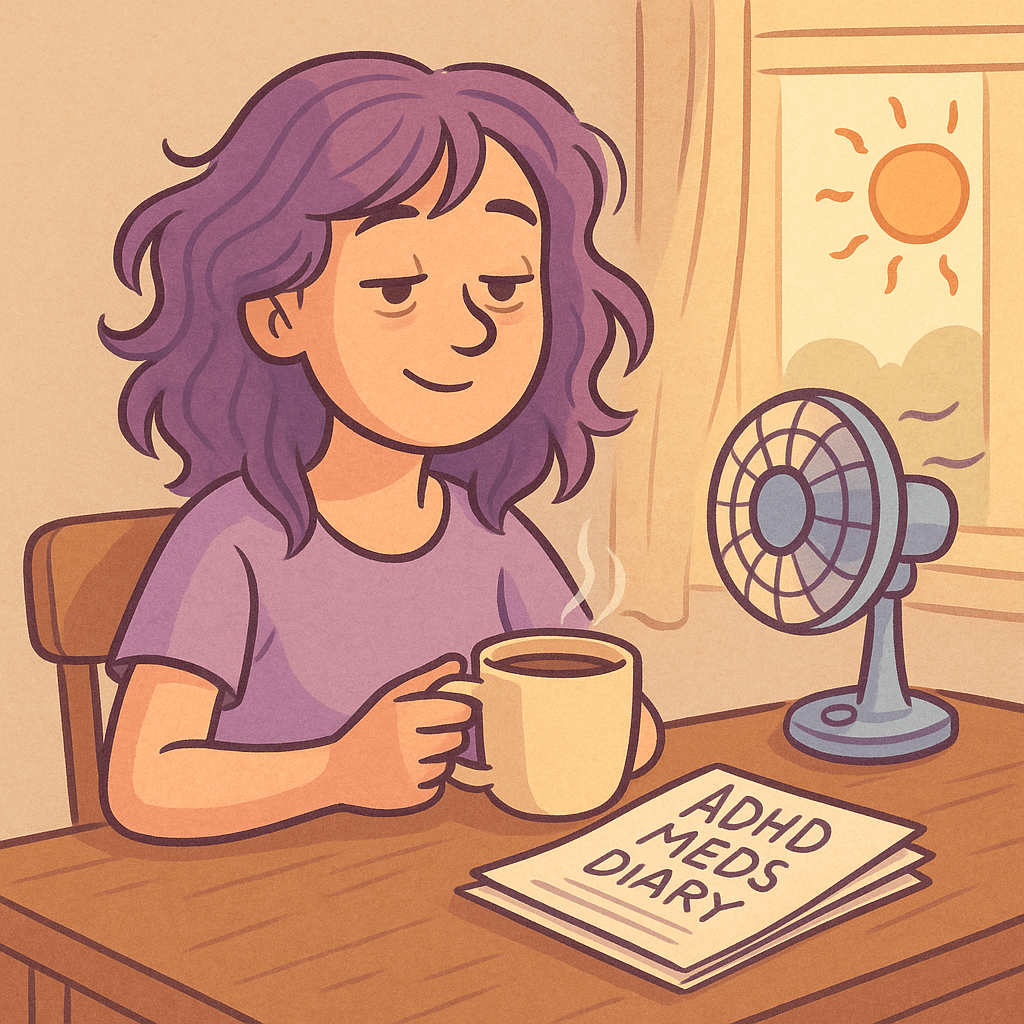
Week one on ADHD meds has been a rollercoaster of quiet brains, dodgy sleep, weird energy crashes, and sun-induced grumpiness. There have been moments of genuine hope and surprising productivity mixed with the kind of exhaustion only ADHD and medication can bring.
If you’re starting this journey too, know that it’s messy, it’s unpredictable, and sometimes it’s downright bizarre — but also, it can be incredibly rewarding when you catch those glimpses of calm inside the storm.
I’ll keep sharing my titration journey here, and if you’ve got questions or want to swap stories, hit me up in the comments or on social media.
Until next time : stay hydrated, keep your sense of humour, and don’t forget: sometimes the quietest brain is the loudest breakthrough.
If there’s one thing I’ve learned on this journey as a neurodivergent parent raising a neurodivergent child, it’s that nothing is ever simple. Not brushing teeth. Not getting out the door. And certainly not school.
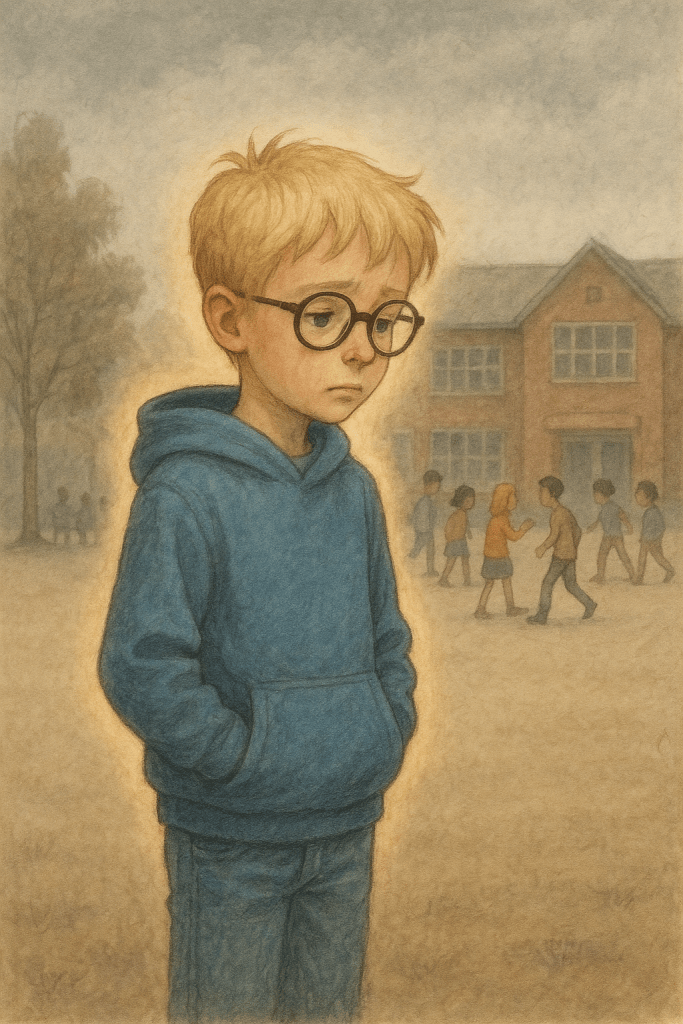
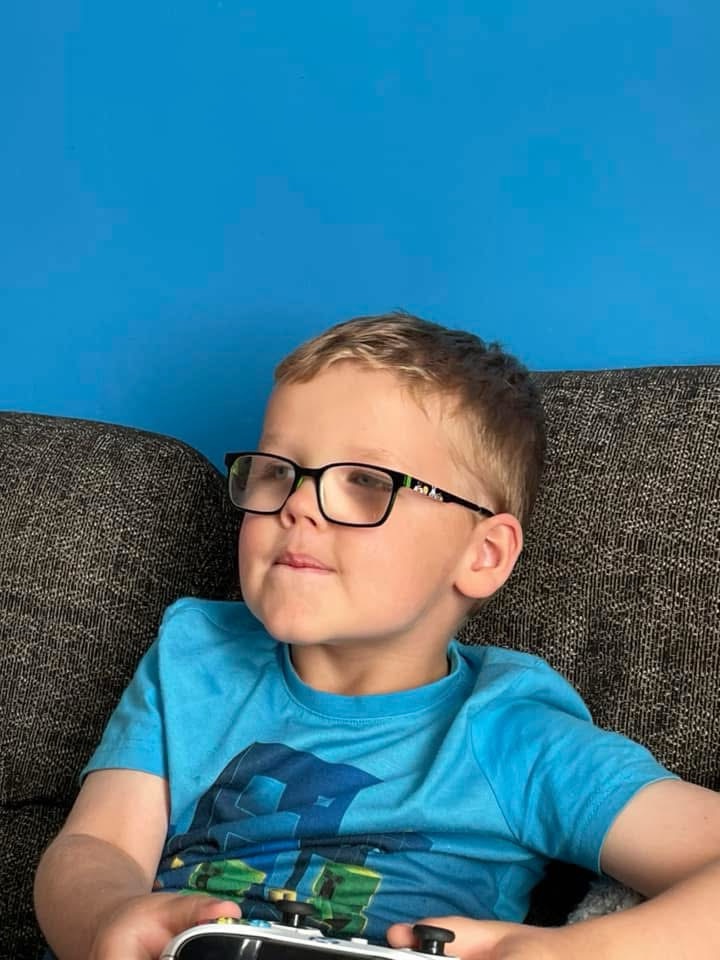
This past year has been a particularly tough chapter for our family. My 8 year old son, Fraser who is proudly and beautifully neurodivergent, has been dealing with bullying at school. Actually it’s been going on since reception if you can believe that!! And not the “kids will be kids” kind (which, by the way, is a phrase I’d like to yeet into the sun). This is targeted. Persistent. Harmful.
And we are exhausted. But also angry. And determined.
The reality for ND kids at school
Fraser is bright, curious, hilarious, and kind. He also processes the world differently from many of his peers. He is the epitome of literal. He might miss social cues or respond in ways others don’t immediately understand. That difference, instead of being celebrated, has made him a target.
He’s been called names, excluded from games, mimicked, and told he’s “weird.” Hes been kicked in the stomach and shin. He’s had his chair pulled away from him as he’s gone to sit down. He’s come home crying. He’s come home silent. He’s started asking questions no 8 year old should have to ask:
“Why don’t they like me?”
“What did I do wrong?”
“Is there something wrong with my brain?”
Cue the heartbreak.
When schools don’t get it
We’ve raised it with the school. Multiple times. So many schools still don’t have the training, the awareness, or the will to create environments where neurodivergent kids feel safe. Not just tolerated. Safe.
We’ve heard the usual:
“He just needs to build resilience.” “Maybe he could try joining in more.” “We haven’t seen anything.”
And let me tell you, when your child is being harmed and the people in charge of protecting them suggest they need to change? It feels like gaslighting. It gives me instant rage!
We’re not just raising awareness, we’re raising hell because this has to stop!
Bullying is not a childhood rite of passage. It’s trauma. It sticks. Especially when you’re neurodivergent and the world already feels confusing and overwhelming. I know from personal experience unfortunately.
We’re doing what we can at home. Validating his feelings. Building him up. Teaching him self-advocacy and pride in who he is. But it’s not enough if the systems around him keep failing.
So we’re pushing back. Advocating. Writing emails that are probably too long and definitely too honest. Finding allies and support systems.
Because Fraser and every ND child deserves to be seen, understood, and protected.
If you’re reading this and your child is going through the same
You’re not alone. We see you. We know the ache of wanting to bubble-wrap your child and also set the world on fire in the same breath.
You’re allowed to feel angry. Tired. Sad. You’re allowed to cry in the car park after drop-off. And you’re allowed to demand better, louder, fiercer, and without apology.
Closing thoughts
This isn’t the post I wanted to write. But it’s the one I needed to. Because silence helps no one but the bullies and the broken systems.
Fraser is still his incredible self. And he’s not the problem, he never was. The problem is a world that refuses to bend for difference.
But we will keep bending it. One meeting, one blog post, one brave kid at a time.
Hi. It’s me, Lucie, your neurodivergent friend, sibling, partner, person at the supermarket who looked like they were having a totally normal day… until they suddenly weren’t.
I want to talk to you about what you don’t see.
You see me smiling and making conversation, but you don’t see the script I rehearsed in my head for twenty minutes beforehand. You don’t see the mental flowchart I created on how to respond “correctly” to you, because every social interaction feels like decoding a language I don’t quite speak.
You see me on the school run, showing up (often late!) But you don’t see the absolute mental gymnastics it took to get there: the 42 alarms, the 5 “just five more minutes” snoozes, the pep talk in the mirror, the war I had with my clothes because everything felt “wrong” on my skin.
You see me smiling at the party, nodding along, laughing at the right times. You don’t see the internal meter ticking down—each second making the lights brighter, the music louder, the voices sharper, the fabric more scratchy. You don’t see me retreat to the bathroom just to breathe. You don’t see the sensory hangover the next day.
You think I’m overreacting when I cry in public, when I melt down “over nothing.” But it’s not nothing. It’s every tiny thing that built up and had no place to go. It’s the cup of overwhelm that got one last drop too many. It’s not weakness. It’s overflow.
You see what I show you.
What I think is acceptable.
What I’ve trained myself, sometimes painfully, to perform.
You don’t see the aftermath. The shutdowns. The three-day recovery. The self-doubt spiral. The silent scream when I realize I misunderstood something again.
You don’t see how hard I try.
And that’s not your fault. But now that you know, I hope you’ll understand why I cancel plans sometimes. Why I need things explained more than once. Why I go quiet. Why I isolate.
And I hope when you see someone else doing those things, you’ll give them grace too.
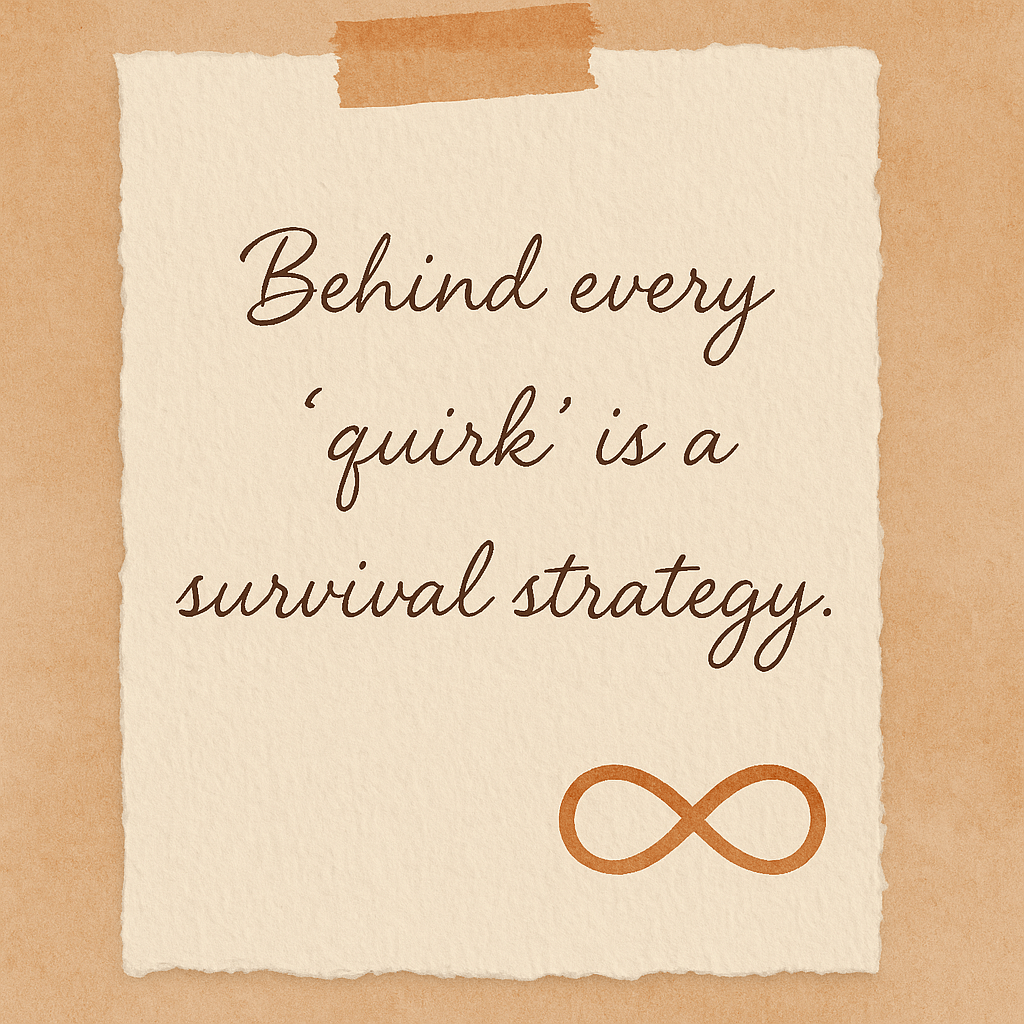
Because behind every “quirk” is a survival strategy.
Behind every “weird” behaviour is a brilliant mind trying to keep pace with a world not built for it.
So please… be kind. Be curious. Be patient.
You don’t need to get it to get me. You just need to care.
Sincerely,
Someone Doing Their Best (Even When It Doesn’t Look Like It)
Grief is hard. Grief with ADHD? It’s like trying to cry and do your taxes while a raccoon throws your memories into a blender.
One minute you’re staring into space, the next you’re deep-cleaning the fridge because sadness showed up as “productive panic.” You forget important dates and then spiral about forgetting them. You cry because you remembered something sweet, then cry harder because you forgot what you were crying about.
Also: did you eat today? No? Same.
Neurodivergent grief isn’t tidy. It’s not linear. It’s a weird soup of feelings, executive dysfunction, and unexpected hyperfixations. But guess what? That doesn’t make it wrong. It just makes it yours.
So whether you’re disassociating in the cereal aisle or sobbing into a hoodie that still smells like them, you’re doing just fine.
Probably. (Let’s be honest, no one really knows what “fine” means anyway.)
I used to think I was just really good at being adaptable.
Growing up, I thought it was normal to feel like I had a different personality for every situation. At school, I was not the quiet, polite girl who followed the rules. Around friends, I was a little loud, trying to be funny, trying to match the energy in the room. Around adults, I was extra charming, smiling when I didn’t want to, nodding even when I didn’t agree.
Turns out, that’s called masking.
And I was doing it like a full-time job. With overtime. For years.
What Even Is Masking?
Masking is when you hide parts of yourself to fit in, to feel safe, or to avoid being judged. In the neurodivergent world, especially with ADHD and autism, it means putting on a kind of social camouflage.
It’s copying expressions. Rehearsing conversations. Forcing eye contact. Smiling when your brain is screaming. Pretending noise doesn’t bother you. Nodding even when you have no idea what’s going on.
It’s trying to be “normal.”
(spoiler: it’s exhausting.)
But I Didn’t Know I Was Doing It
I thought everyone was this tired after social events. I thought everyone practiced what to say before a phone call or had to recover in silence after a trip to the shops.
I thought I was just bad at being a person.
Too sensitive. Too much. Too intense.
Or worse, not enough of the right things.
I was constantly measuring my words, my reactions, my face. And when I finally learned what masking was, it hit me like a freight train: I had been doing it my whole life.
Why We Do It
We mask because we want to belong. Because we’ve been taught that our natural selves are “wrong,” “too much,” “weird,” or “difficult.” We learn early on that stimming is “inappropriate,” that being blunt is “rude,” that being overwhelmed makes us “dramatic.”
So we twist and contort. We shape-shift. We blend in.
But the cost is real.
Burnout. Anxiety. Depression. Identity confusion. That bone-deep exhaustion from constantly editing yourself.
Unmasking is a Whole Journey
Now that I know what masking is, I’ve started to notice the small ways I still do it. I catch myself toning things down or holding things in. I’m learning to ask: Is this really me, or is this the version I think people want?
Unmasking isn’t about throwing social norms out the window. It’s about giving myself permission to exist without apology.
To stim without shame.
To say “no” without guilt.
To rest without “earning it.”
Final Thought
I’m not mad at my past self for masking. It kept me safe. It helped me survive. But now? I want to live, not just perform.
So if you’re slowly peeling back the layers, trying to figure out who you are underneath the mask: I see you.
And who you are is enough, even when you’re not trying to be.
Two of my children have officially flown the nest. They’re out in the world, building lives of their own and I’m so bloody proud of them. But as an ADHD parent, this change hit differently than I expected. It’s not just a life transition; it’s a full-body experience that’s been equal parts emotional, disorienting, and oddly quiet.
Well… mostly quiet.
Because while my older two are off finding their paths, I still have one little bird at home, my 8-year-old, who’s also neurodivergent. And loud!
Parenting a young ND child while processing the emotions of older children moving out is a bit like living in two realities. On one hand, I’m grieving the end of one chapter, missing the noise, the shared chaos, the late-night conversations. On the other, I’m still very much in the thick of parenting: navigating sensory needs, emotional dysregulation, and the beautiful, exhausting intensity that comes with raising a neurodivergent kid.
And with ADHD in the mix, transitions aren’t a clean break. My time blindness makes it hard to grasp how fast everything has changed. Emotionally, I can go from feeling deep grief one minute to hyperfocusing on a painting the next. The quiet moments are jarring, but the busy ones don’t always feel grounding either.
What I didn’t expect was how identity-shaking this would all feel. For years, parenting has been my anchor, the structure that helped me function when executive dysfunction made everything else fall apart. Now, I’m trying to figure out who I am in this new season, especially with one foot still firmly planted in active parenting.
There’s pride, of course. So much pride in the young adults my older kids are becoming, and deep love for the little one who still needs me daily. But there’s also this quiet ache. A sense of standing in the middle of a bridge, waving goodbye with one hand while holding tightly with the other.
I’m learning that both things can be true:
I can miss the way things were while still embracing what’s ahead. I can feel untethered while still being needed. I can rediscover myself without letting go of who I’ve always been.
If you’re an ADHD parent navigating mixed-stage parenting, I see you. If you’re grieving the changes while still showing up every day for the little ones who aren’t quite ready to launch, I see you, too.
This isn’t a clean-cut transition. It’s layered, messy, and full of emotion. But it’s also a chance for reflection, for reconnection, and for finding out who we are beyond the roles we’ve held for so long.
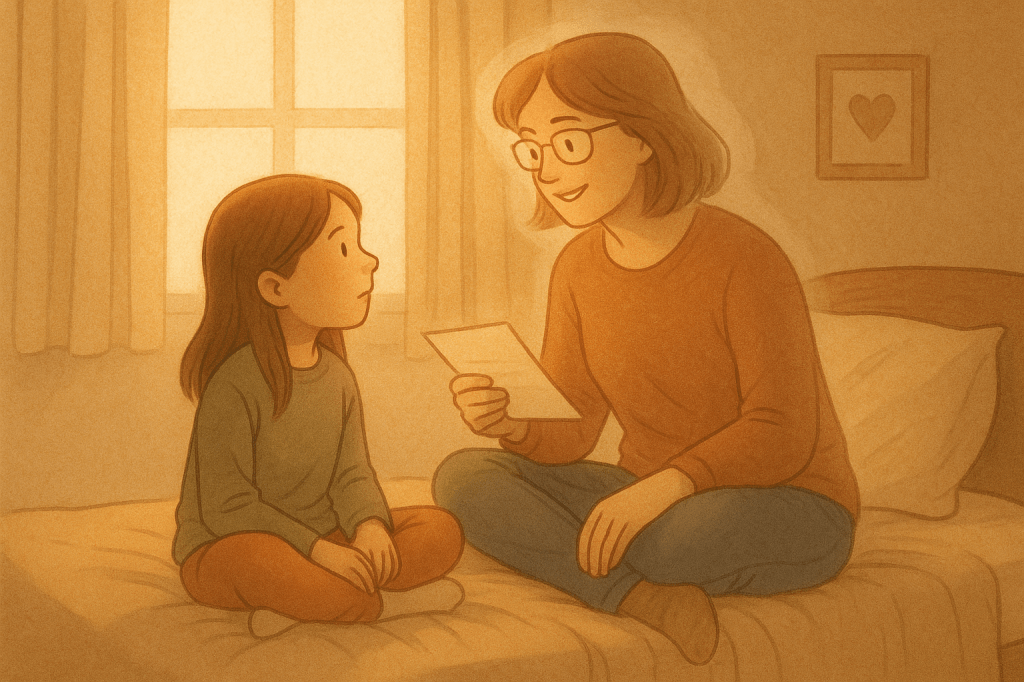
If I could sit beside you on the edge of your bed after a long day of trying to be “normal,” or in the hallway after yet another moment where you felt like you messed up, I’d start with this:
You are not broken.
You’re not lazy, even if it takes everything in you to start things. You’re not rude, even if you interrupt or wander off mid-conversation. You’re not weird.. okay, maybe you are a little, but that weirdness is your magic!!
I know how confusing it is to watch other people do life with what looks like ease. How they get up, get dressed, remember everything, say the right things, and don’t seem to need a nap after a trip to the supermarket. It’s not because you’re failing. It’s because they’re not fighting their brain every step of the way… and you are. You always were. And still, you kept going.
You didn’t know the words: autism, ADHD, sensory overload, executive dysfunction. You just knew something about the way you processed the world didn’t match what was expected of you. It all seemed so easy for others! And when people don’t understand something, they label it. They called you difficult. Dramatic. Moody. Too much. Or worse…. lazy.
But now I know the truth. You were never lazy. You were navigating a world that wasn’t built for your brain, and you were doing it without a sat nav.
Here’s what I want you to know:
The things that made you feel like an outsider are the same things that make you deeply empathetic, wildly creative, and incredibly resilient. The way you felt everything so deeply? That becomes a strength. That feeling of not belonging? One day, you’ll find your people. And you’ll belong to yourself first.
You’ll stop trying so hard to be “normal,” because you’ll realise that your normal is valid. You’ll build a life that fits you, not the other way around.
And maybe most importantly, you’ll forgive yourself. For all the things you didn’t understand. For all the times you thought it was your fault. For every moment you tried to shrink yourself to make others comfortable.
In the next few weeks, I’m starting something I’ve been waiting a long time for: ADHD medication titration. And honestly? I’m so excited I can barely sit still (though that might be the usual ADHD).
For those unfamiliar with the term, titration is the process of finding the right type and dose of medication that works best for your brain. It’s not a one-and-done thing, it’s a slow and steady process of trying, adjusting, and checking in with your doctor to see how your body and brain respond.
Think of it like tuning a radio. You’re trying to find the clearest station! Your brain’s best “frequency” if you like, where things finally start to click.
Why This Matters So Much to Me
Living with ADHD, especially being diagnosed later in life, has been a whirlwind of “aha” moments and “oh wow, that explains a lot.” But even with all the self-awareness, strategies, and support, there are still days when I feel like I’m trying to juggle flaming swords while riding a unicycle. On a tightrope. In a windstorm. Literally!
I’m doing the work. I’m learning the tools. And now, I’m ready to add one more piece to the puzzle: medication.
This doesn’t mean I think meds are a magic fix. They’re not. But they really can help level the playing field, so I can use all the strategies I’ve worked so hard to build without constantly fighting against my own brain.
What I’m Hoping For
A little more calm in the chaos. A little more follow-through on the ideas I’m passionate about. A little more peace in the quiet moments And maybe, just maybe, the ability to finish a task without being lured away by 12 others.
I know the journey might not be smooth. There might be side effects, adjustments, frustration. But I’m going in with hope, curiosity, and the support of a doctor who understands and my little family!
Sharing This Because…
ADHD can be invisible. And so many of us walk around wondering why things feel harder than they should, until one day, the pieces start to fall into place. If you’re on this journey too, whether you’re considering meds, trying them, or even deciding against them…. I see you!
Every ADHD brain is different. Every path is valid. And every step toward understanding yourself better is worth celebrating.
So here’s to Day One of titration.
Here’s to science, support, and second chances.
And here’s to the possibility that things might get just a little easier.
You know that sudden, stomach-dropping dread when someone says, “Hey, can we talk?” and your brain immediately flashes to every mistake you’ve ever made from that awkward thing you said at a party in 2009 to not replying to a text within 3.7 minutes?
That, dear reader, might be Rejection Sensitive Dysphoria.
RSD, for those unfamiliar, is basically the emotional equivalent of living with your feelings wired directly into a high-sensitivity smoke detector. It’s not currently an official diagnosis, but if you’ve ever spiralled into self-loathing because someone might be mad at you (or worse, disappointed), then you know it’s as real as the anxious pit in your stomach.
And if you’re neurodivergent, especially if you have ADHD or autism, you might be more familiar with RSD than you’d like to admit.
What Is RSD? (Besides Annoying)
Rejection Sensitive Dysphoria is a fancy term for a very un-fancy experience: extreme emotional sensitivity to perceived or actual rejection, criticism, or failure. Emphasis on perceived. You don’t need to be actually rejected for the dysphoria part to kick in. All it takes is a raised eyebrow, a vaguely worded email, or someone taking a little too long to laugh at your joke.
For me, it feels like this:
Someone says, “Hmm, I’m not sure that’s the best idea,” and my brain translates it to, “You are a fundamentally flawed human being and everyone you’ve ever loved regrets knowing you.”
Helpful, right?
RSD tends to show up loud and uninvited in people with ADHD, and sometimes in autistic folks too. It’s not just sensitivity, it’s an overwhelming, sometimes physically painful reaction that can lead to shame, withdrawal, people-pleasing, or a well rehearsed internal monologue about how you’re probably the worst.
Real Life with RSD: A Theatrical Production
Let’s talk about how this plays out in real life. Say I text a friend and they don’t respond within a few hours. My rational brain knows they’re probably just busy. My RSD brain? It’s already planning the eulogy for our friendship.
Even tiny moments… tone of voice, lack of exclamation marks, or a short “k” in a message can feel like rejection. My brain fills in all the blanks with worst-case scenarios, because apparently, it moonlights as a dramatic novelist.
The Aftermath: Overthinking, Masking, and Avoidance
One of the worst parts of RSD is the way it sticks around. It’s not just the initial pang of hurt, it’s the hours (or days) of self-criticism, overanalyzing, and rewinding conversations like I’m watching my own personal horror movie on repeat.
Sometimes, to avoid the pain of potential rejection, I’ll pre-reject myself. “They probably don’t want to hang out.” “I shouldn’t apply for that job, they’ll just say no.” This lovely little habit is called self-sabotage, and wow, am I good at it.
Other times, I go full chameleon, people-pleasing, masking, over-apologizing. I try so hard to avoid rejection that I end up rejecting myself.
It’s exhausting.
Coping (Without Moving to the Wilderness)
Let’s get real: RSD isn’t something you just “get over.” But there are ways to cope that don’t involve faking your own disappearance.
Here are a few that have helped me:
Naming it. Just saying “Oh, hey, this is my RSD reacting” can slow down the spiral. It puts a little emotional distance between me and the drama in my head. Prepping myself for feedback. I remind myself that feedback is information, not a moral judgment. (I mean, I try. Sometimes I cry anyway.) Checking the facts. Did they actually say something hurtful? Talking to safe people. Sometimes, I just need to say, “Hey, I’m having a moment. Can you remind me I’m not a terrible person?” Humour. Honestly, laughing at how extra my inner drama queen can be has saved me more than once. If I’m going to spiral, I might as well make it a musical.
If You Feel This Too—You’re Not Alone
If any of this sounds painfully familiar, I want you to know: you’re not broken. You’re not “too sensitive.” You just have a nervous system that’s a bit… enthusiastic. And while it can be a real pain, it also means you probably feel love, creativity, and empathy just as intensely.
You’re not weak for being affected. You’re strong for showing up anyway.
And if someone ever tells you that you’re “overreacting,” just remember: they don’t know the epic inner monologue you’re working with.







 Sensory Soul